Pages

Showing posts with label Tech. Show all posts

Wednesday, December 1, 2010

Technology Discussion of the Week - Part 1

My discussion about technology this week is all about new cutting edge changes that I and others believe will alter the technology paradigm in the future. We have all seen the development of social media through the use of Facebook, Tiwtter and overall increase in exposure to the internet and mobile devices. There are more technological and demographical changes are on the horizon and I intend to discuss that with you today.


In part 1, I am going to be going over two (2) of the four (4) hot topics that I foresee changing the way YOU will interact and relate with technology:

1. New kind of connection called NFC - Near Field Communication (Link)
2. Kinect – A new way to play video games (Link)

------------------------------------------------------------------------------------------------------------


(http://www.instablogsimages.com/)

NFC is a relatively unknown initiative that has extensive potential to change the way we communicate with electronic devices in our everyday lives. Let me give you an example: imagine no more credit cards, debit cards, car keys, alarm codes, ID, passports and the list goes on. So how does it work?
It is simply a very short range (10 cm), hi frequency data transmitter that transmits at very fast speeds. It will be used almost exclusively on mobile phones and there are rumors that Android, Nokia, RIM phones and the next iPhone 5 will all support NFC. There are some security aspects that need to be addressed such as eavesdropping, data modification and the mere fact that your mobile device could be stolen. Massaging of this new technology is certainly needed, however the implications of NFC are endless and could quite honestly change the way we interact with other devices in the near future. Simply pondering the ability of pulling out your phone to text, surf, tweet, update, read, play and now pay for your lunch makes me smile at our ability to take technology to the extreme!

------------------------------------------------------------------------------------------------------------

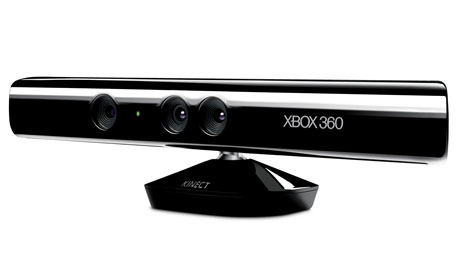
Kinect is a buzz word amongst those within the gaming sector, the blogosphere and people who watch the news or read the business section. If you are one of those people that live under a rock (or don’t know much about new gaming gadgets), the Kinect is a new Xbox 360 add on to allow users to experience motion gaming. Through the use of many different cameras, a microphone, and infrared scanner a user can literally become the controller. This is the first controller-less technology that has become available to the general public ever and opens a whole new market for potential uses. We may see entire GUI’s in many different applications not ever needing input from devices such as keyboards and mice. The eventual grand finale that I like to dream about would be a completely interactive virtual 360 degree GUI completely controlled with the users hands and movements. One can dream of the day!

Friday, May 14, 2010

Information Overload

Over the last century, society has changed and developed in such a way that we demand instant gratification, becoming popular through the technology boom along with the development of the internet. Is our ability to simply turn to Google for information or reply to a Facebook update really necessary for our self actualization? We are being bombarded by logos, icons, text, false information, advertisements and the occasional popup describing male genital elongation. This presents some large scale problems:


Too much screen time increases insomnia and anxiety but more evidently, it stunts social growth in children, prevents face to face social interactions, and decreases physical activity. Removing the physical and personal connection with someone makes it increasingly difficult to communicate effectively. At the same time, 30%-33% of Americans are now obese because of lack of exercise and bad diet. There is no excuse for that!

Too many distractions lead to forgetting about what you need to do to make yourself happy. If you are linked in all the time to keep up with what your friends are doing, you may forget that you need something more than reading a twitter message on your smart phone. It would be easier to just meet and talk about your life with them over a beer instead of over the internet. Some people become obsessed with something online that is simply not real. 'Escaping reality' online is causing detrimental problems for people finding lovers, spreading false information quickly and deteriorating social and physical health.

Many people seem to enjoy the ability to disconnect with the existent world by connecting to an online one. The problems above are only a select few of a global shift in the way we interact with other people. Some may say that we are increasing our sociability and reach to the rest of the world but I don't think sitting with your family and updating your Twitter is being social.

Monday, May 10, 2010

E-Waste and Ethical Recycling

I have mentioned in a past posting about how our fast moving technology is leading to an unsustainable future. E-waste is any electronic waste such as TV’s, Computers, electronic gadgets that become a part of the waste system and is increasing due to our fast moving technology. The largest difference between regular trash and e-waste is the presence of many chemicals residing within. These valuable yet toxic metals present a large problem, mostly the contamination to the area around where the e-waste is dumped and eventually into the water sources. So like in my past post, I recommended recycling your e-waste to help the environment; this being an ethical and sustainable practice right?

I have recently gone to a volunteer session at Free Geek, a Canada and USA ethical salvaging centre, where I learned some very key ideas involving recycling. Contrary to popular belief, recycling centres are not always sustainable, efficient, ethical, or environmentally friendly. A large portion of them do not recycle everything that is within the product such as certain chemicals or heavy metals. Many organizations simply ship e-waste to other countries such as Africa or China where some is salvaged for money and the rest is dumped. This presents a huge problem especially with the increase in e-waste within the past 10 years. Estimates of around 40-50 million tonnes of e-waste is dumped around the world yearly; that number steadily increasing with the increased perception of obsolete electronics. Not only are these recycling organizations not recycling efficiently or sustainably, there are just not very many of them at all!

Concepts surrounding the idea of recycling are at times misconceptions so one must do some research into which recyclers are ethical. Call and ask who their downstream recyclers are and if they are withholding that information, you know something is not right. It is the consumer’s responsibility to use their electronics for their entire lifetime and ensure proper disposal for this is the only earth we all have to live on and what you can do affects how we live!

Facts and Definitions

Planned Obsolesce: A marketing strategy used to create new software in order to make the old electronics running it obsolete.

Vista Layer: The millions of tonnes of electronics dumped due to Microsoft creating Vista, an inefficient operating system designed to get the consumer to update their computer. (Planned Obsolesce)

Canada has signed an international treaty called the Basel Convention which is used to prevent the export of e-waste to other countries (recycle within the same country). Canada has not enforced this treaty due to lack of funding so e-waste is still shipped across borders.

The average lifespan of a computer in 1999 was 6 years, now it is 2 years.

Pictures from trade2save.com, freegeekvancouver.org, thetechbrief.com

Friday, April 30, 2010

Cloud Computing


What is it?

Cloud computing is a relatively new phenomenon within the IT technology sector and is changing the world. In a nutshell, the ‘cloud’ is the term used to represent the information on the internet available for user download. For example, when you tweet a message on Twitter the message is put into the cloud for all to see, search, and download to their screen. Twitter is a public cloud, but there are private clouds such as Facebook where the content is limited to your ‘friends’. The image below shows how all of these interconnected devices and business servers all put content into the internet cloud which is immediately available for anyone with a browser to view. Cloud computing is a revolutionary concept which affects the general public and businesses worldwide.


Problems

Obviously, this easily accessible world of cloud computing can raise some concerns within the general public. Just recently, a company designed around social online shopping named Blippy allowed some users credit card information to become part of the source code in its website. Google’s search engine then indexed the content, making it available in the cloud for the public to search and access. Privacy is naturally the biggest concern that people have with this new technology because people halfway around the world can learn things about you in very remarkable ways. Another power behind cloud computing is the traceability of your movement on the web. Your computer gives off a unique signature to the internet when you are browsing which can be used to trace and gain information about you, the user. I have code running on this blog that tracks site hits from what location, browser, IP address, website, etc etc. Most web users I can guarantee do not know this. Being ignorant of the implications of putting data into the cloud is becoming increasingly dangerous. Soon the people using online functions will have to decide to give up their privacy or demand for an alternate system. My advice to you is: do not put anything online without realizing the potential of others using that data for other means!

Monday, April 26, 2010

Have you Heard of the Floppy?

The Problem

I had to think back to remember what a floppy disk was too! Sony recently announced that they would be ceasing their production of floppy drives in their Japanese factory. Believe it or not, floppy's were invented in the mid 1970's which is only 35 years ago! They have already become completely obsolete and now bordering on extinct! Other things like the CD player, CD's, and Walkmans (just to name a few) are quickly following in the floppy's footsteps

This raises concern about our lives and the ever increasing need to be sustainable. Western society has been completely transformed by this technology rage and with that comes the speed at which it changes. A cell phone that arrives today, being cutting edge and amazing, will be relatively obsolete almost guaranteed within a year. The original iPhone for example cannot do half the things that the newest 3Gs version can do.


The Reason

Behind these electronics such as high tech storage devices, gaming machines, and cell phones comes the power that is driving them, their manufacturers. So many of the things we buy rely on services provided by their providers, again coming back to the iPhone. All Apple has to do to get people flocking towards their newest product is to restrict the older versions from enjoying what the newer ones can accomplish.

On a different tack, I remember when a 512 megabyte flash drive was over $100! You may only have to think back about two years to remember that, but now 2 gigabyte drives are sold in bins for $15 or less. The demand for space to store unneeded junk on your computer has grown exponentially. All of this begs the question: do we need to throw all this 'old' technology away? The majority of obsolete tech is now sitting in your local landfill, not given to someone who would cherish it! Because manufacturers want to make an extra buck, they move new tech at an extremely fast rate leading more and more to an unsustainable future.


The Solution

How can you be more sustainable in your life? There are many local recycling depots that will take used computers, printers, and an assortment of electronics for free (there is one in Vancouver called Free Geek). They can disassemble them, sell the metal and recycle the plastic. Why are you throwing out your perfectly working MP3 player or Walkman when there are people that could use it? Basically, take all the old electronics that you will never use again sitting on your shelf (I know that there are some) and donate them to an organization. It makes a big difference for those who receive these electronics, for relatively little work on your end!

(Image courtesy of FreeFoto.com)

Tuesday, April 20, 2010

Building a Super Computer

I have gone through a lot of grief trying to find resources for building your own gaming PC and troubleshooting when (not if) things do not work. I will give you a list of excellent links to help you work things out without having to go talk to the pros and spend more money!

Hardware to build your PC
  • This link about building your PC is a great PDF document about the hardware associated with your new PC. Excellent for a basis of knowledge around the internal computer systems.

Troubleshooting
  • If you are running an x64 bit system I would recommend this windows 7 forum (applies to most windows operating systems as well) for troubleshooting because 20 other people have probably run into the same problem.
  • For general info about super computers and/or regular computer problems I would recommend tech-forums and techsupportforum
  • If your computer is running slow:
    • read this blog post at tips and tricks
    • defragment your hard drive (tutorial)
    • make sure you are not running at 95% of used disk space (2 terabyte hard drives are now found for under $200)
    • look to update RAM if your computer is using more than 50% idling (excellent tutorial for how to find your RAM type and how to upgrade) (see below to download hardware monitoring software to determine possible needed upgrades)
Monitoring
  • It is crucial to monitor your super computers components to maintain health and detect problems early. It also helps to know how your computer is running in terms of CPU clock speed, RAM usage/type, type of graphics card, and CPU/GPU temperatures.
    • I would recommend CPU-Z for monitoring hardware such as CPU and memory
    • I would recommend GPU-Z for monitoring your graphics card clock and temperatures
**NOTE if your computer lags after a graphics card or CPU upgrade, this may be due TO HIGH OF TEMPERATURES! Look into getting an internal fan or upgraded cooling system!

Overclocking
  • This is a hot topic for those with super computers and not for the beginner computer user. There are tutorials like this one about what it means to overclock and how to go about doing it. Make sure you do your research about how to do this safely.
    • Make sure that you have adequate cooling and hardware monitoring tools otherwise you may destroy sections of your computer!
Feel free to contact me with any questions!

Combining IT and Business

Information Technology and Business

I believe that the market for IT learned individuals has grown exponentially in the past 20 years, leading to a gap between those with knowledge about running computers and those running a business. The foundation and smooth operation of many businesses rely on secure, complex and integrated systems, whether it be the company website or internal e-mail accounts and calendar synchronization. I believe there is now an increasing market for persons with both the business and computer mindset, bringing them together to create profitable and efficient systems. The complexities involved with given system architecture are next to impossible to explain and troubleshoot with one that has little or no IT experience. And at the same time, employees involved solely with the hard code, network and analysis do not have the business concepts needed to maximize efficiency. Schooling in both areas of knowledge is becoming increasingly valuable within any business.

Sauder School of Business and Computer Science Faculty

At the University of British Columbia, the faculty of commerce (Sauder) and the faculty of Computer Science have formed a dual major program This combines the business side of IT through the specialization of Management of Information Systems (MIS) with Computer Science courses such as database management and complex software construction. I personally am taking a minor in computer science in order to bypass unnecessary pre-requisites while still learning about important factors within computer science. This experience in my first year has been rewarding and I can already see the benefits of dipping within both areas of knowledge and I can personally vouch for the benefits of having an understanding of both disciplines.